![Engagedly dark.png]](https://help.engagedly.com/hs-fs/hubfs/Engagedly%20dark.png?height=31&name=Engagedly%20dark.png)
In a talent pipeline, readiness is the evaluation layer that shows how prepared a candidate is for a target role. Unlike stages, which track progression over time, readiness focuses on the candidate’s actual ability to step into the role.
Readiness statuses
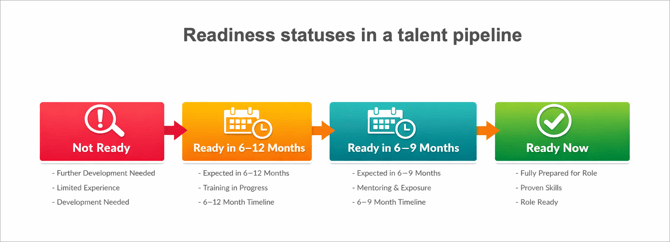
Typical statuses include:
- Not Ready: Candidate needs further development before being considered for the role.
- Ready in 6–12 Months: Candidate is progressing and expected to be prepared within a year.
- Ready in 6–9 Months: Candidate is nearing readiness and requires focused exposure or mentoring.
- Ready Now: Candidate is fully prepared and can step into the role immediately.
Why readiness matters
Readiness ensures organizations do not rely on assumptions about progression. It provides a structured way to measure preparedness, supports succession planning discussions, and helps leaders make confident, data‑driven decisions about who can step into critical roles.
How they work
- Readiness is tracked separately from stages to ensure evaluation is deliberate and data‑driven.
- Candidates are grouped by readiness in board‑style views for easy visibility.
- Movement between readiness statuses reflects evaluation outcomes, not automatic progression.
- The first and last readiness statuses cannot be deleted, maintaining consistency in evaluation.